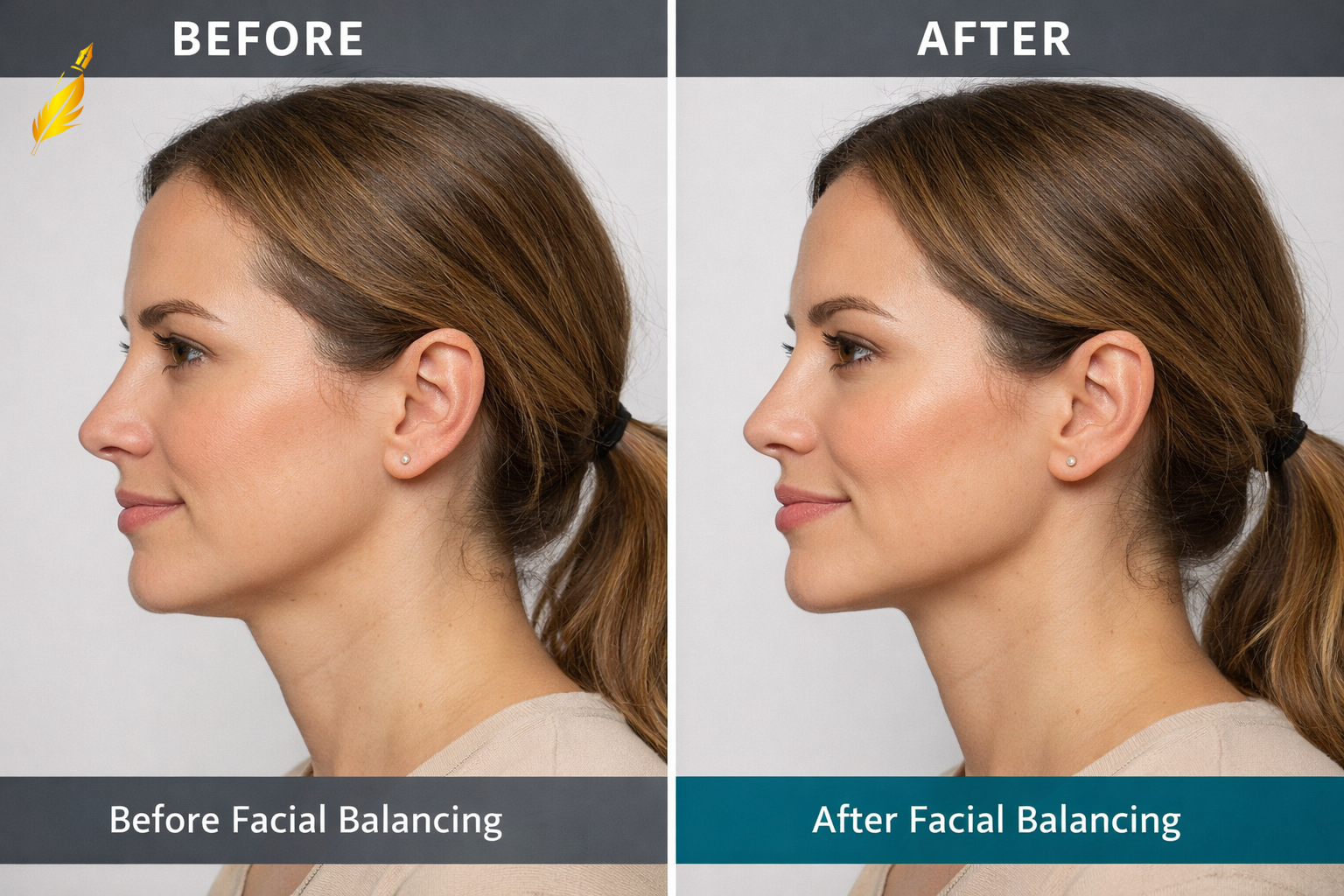

Facial balancing has quickly become one of the most talked-about aesthetic treatments in recent years—and for good reason. If you’ve ever seen facial balancing before and after photos and thought, “Something looks better, but I can’t tell exactly what changed,” that’s the whole point.
We will take a deep dive into facial balancing before and after results, how the treatment works, why it matters, and what makes it different from traditional cosmetic procedures. We’ll explore its history, key milestones, benefits, common treatment areas, real-world examples, and frequently asked questions—all in a clear, casual, and easy-to-understand way.
Whether you’re just curious, researching aesthetic treatments, or considering facial balancing yourself, this guide will help you understand what to expect and why this approach has become so popular.
Understanding Facial Balancing: What Does It Really Mean?
Facial balancing is a non-surgical aesthetic approach that focuses on improving overall facial harmony rather than altering a single feature in isolation. Instead of just plumping lips or filling wrinkles, practitioners evaluate the face as a whole—looking at proportions, symmetry, and how features relate to one another.
Facial Balancing vs Traditional Aesthetic Treatments
Traditional treatments often target specific concerns:
- Lip fillers for thin lips
- Cheek fillers for volume loss
- Jawline fillers for definition
Facial balancing takes a broader view. The goal is not to make one feature stand out, but to make everything work together.
Key difference:
- Traditional approach = feature-focused
- Facial balancing = harmony-focused
This is why facial balancing before and after images often look subtle yet transformative.
A Brief History of Facial Balancing in Aesthetic Medicine
Facial balancing didn’t appear overnight. It evolved alongside advancements in cosmetic injectables and a shift in beauty standards.
Early Cosmetic Enhancements
In the early days of aesthetic medicine:
- Treatments focused heavily on wrinkle reduction
- Results were often obvious and sometimes overdone
- Little attention was paid to facial proportions
The Shift Toward Natural Results
Around the 2010s, patient preferences began to change:
- Desire for “natural-looking” enhancements increased
- Social media normalized subtle cosmetic work
- Practitioners began emphasizing facial anatomy and balance
Modern Facial Balancing
Today, facial balancing is:
- Guided by detailed facial assessments
- Based on symmetry, proportions, and facial movement
- Customized to each individual’s unique structure
This evolution is why modern facial balancing before and after results look refreshed rather than “done.”
Why Facial Balancing Matters More Than Ever
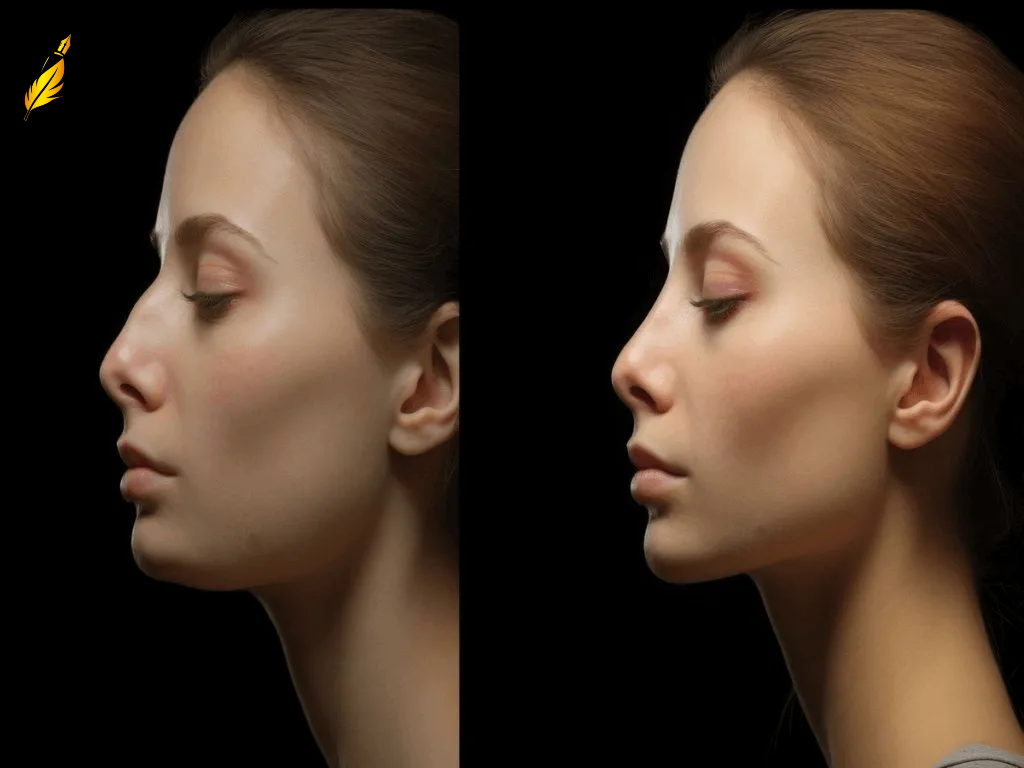
Facial balance plays a major role in how we perceive attractiveness, youth, and even confidence.
The Science of Facial Harmony
Studies in facial aesthetics consistently show that:
- Balanced facial proportions are perceived as more attractive
- Symmetry contributes to a youthful appearance
- Small adjustments can create significant visual impact
Facial balancing works with these principles instead of fighting them.
Cultural and Social Relevance
Facial balancing has gained popularity because:
- People want enhancements that don’t scream “cosmetic work”
- Work-from-home culture increased self-awareness on video calls
- Beauty trends shifted toward subtle refinement
The growing interest in facial balancing before and after comparisons reflects this broader cultural movement.
What Goes Into Facial Balancing? A Step-by-Step Breakdown
Facial balancing is not a one-size-fits-all treatment. It’s a strategic process.
Step 1: Full Facial Assessment
A qualified practitioner evaluates:
- Facial symmetry
- Proportions between the upper, mid, and lower face
- Bone structure and soft tissue distribution
- Natural facial expressions
Step 2: Identifying Imbalances
Common imbalances include:
- Recessed chin
- Weak jawline
- Flat cheeks
- Over- or under-projected lips
Step 3: Strategic Treatment Planning
Rather than treating one area aggressively, small adjustments are made across multiple points.
Step 4: Gradual Enhancement
Most facial balancing treatments:
- Use conservative amounts of product
- May be done over multiple sessions
- Prioritize subtle improvement
This explains why facial balancing before and after results often look refined, not dramatic.
Common Areas Treated in Facial Balancing
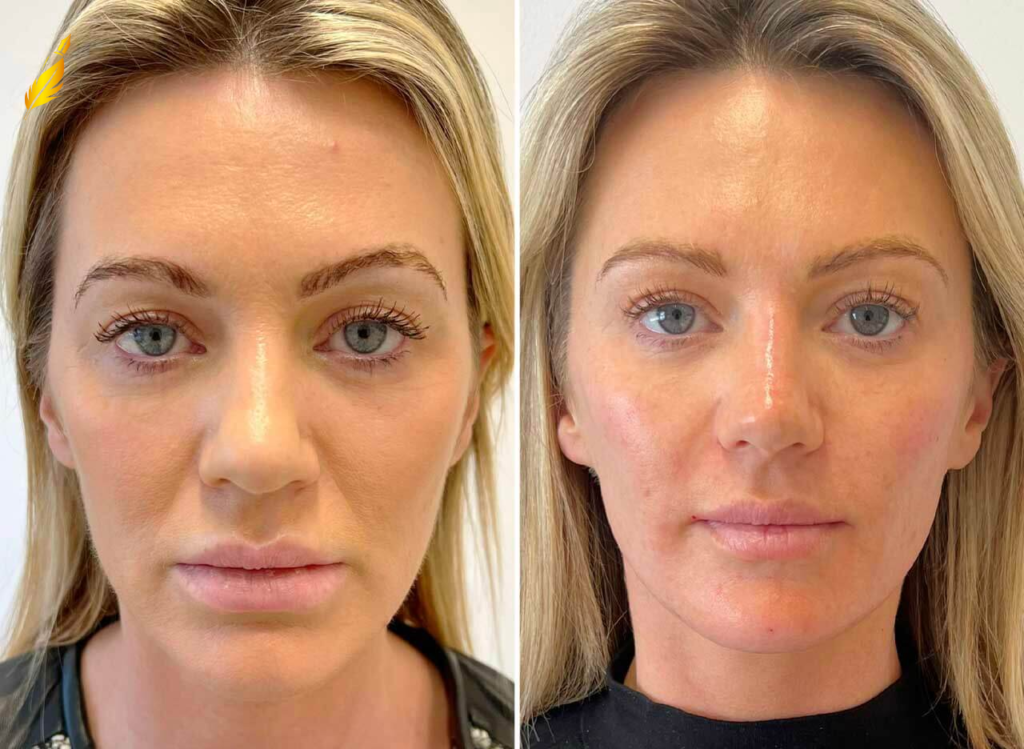
Facial balancing can involve several areas depending on individual needs.
Chin and Jawline
- Improves profile balance
- Enhances facial structure
- Creates better proportion between the lower and mid-face
Cheeks
- Restores volume
- Supports under-eye and mid-face
- Prevents a hollow or tired appearance
Lips
- Enhances shape rather than just size
- Balances lips with nose and chin
- Avoids overfilled appearance
Nose (Non-Surgical Rhinoplasty)
- Improves profile symmetry
- Camouflages small bumps or dips
- Enhances overall facial harmony
Temples and Under-Eyes
- Softens hollow areas
- Creates smoother transitions between facial zones
Facial Balancing Before and After: What Changes Are Most Noticeable?
One of the most interesting things about facial balancing is how subtle the changes can be.
Common “Before” Characteristics
- Features look disconnected or disproportionate
- Face may appear tired or flat
- Profile lacks definition
Common “After” Results
- Improved facial flow and symmetry
- More defined structure
- Softer transitions between features
- A refreshed, confident appearance
Many people say friends notice they look “better” or “well-rested” without knowing why—one of the biggest advantages of facial balancing.
Lesser-Known Facts About Facial Balancing
Here are some insights that often surprise people:
- Facial balancing isn’t about perfection—it’s about proportion
- Small changes often create the biggest impact
- Treating the chin can dramatically affect how the nose looks
- Facial balancing can make the face look slimmer without weight loss
- Overfilling one area can throw off balance elsewhere
These details help explain why professional planning is essential for successful facial balancing before and after outcomes.
Facial Balancing vs Full Face Filler: Are They the Same?
While the terms are sometimes used interchangeably, they’re not exactly the same.
Facial Balancing
- Focuses on proportions and harmony
- Uses precise, minimal amounts
- Aesthetic-driven rather than volume-driven
Full Face Filler
- Often focuses on volume restoration
- May address aging-related concerns
- Can be part of facial balancing, but not always
Facial balancing is more about strategy than quantity.
Who Is a Good Candidate for Facial Balancing?
Facial balancing can benefit a wide range of people.
Ideal Candidates Include:
- People who feel their features don’t “match”
- Those wanting subtle enhancement
- First-time cosmetic patients
- Individuals seeking non-surgical options
Not Just for Aging Concerns
Facial balancing isn’t only about anti-aging. Younger individuals often seek it for:
- Profile enhancement
- Symmetry correction
- Structural refinement
How Long Do Facial Balancing Results Last?
Results vary depending on:
- Products used
- Treatment areas
- Individual metabolism
General Longevity
- Most results last 6–18 months
- Maintenance treatments help preserve balance
- Gradual touch-ups often look more natural than one-time treatments
Potential Risks and Considerations
While facial balancing is generally safe when performed by trained professionals, it’s still a medical procedure.
Important Considerations
- Choose an experienced practitioner
- Avoid trends that promote overfilling
- Understand that subtlety is key
The best facial balancing before and after results come from conservative, well-planned treatments.
Related Topics That Complement Facial Balancing
To boost understanding and SEO relevance, facial balancing is often discussed alongside:
- Dermal fillers
- Non-surgical facial contouring
- Facial aesthetics and symmetry
- Profile balancing
- Natural-looking cosmetic treatments
These topics overlap because facial balancing often incorporates elements of each.
Also Read: Sculptra Before and After: What to Expect, Results Timeline, Benefits, and Realistic Outcomes
FAQs
What is facial balancing in simple terms?
Facial balancing is a cosmetic approach that improves overall facial harmony by adjusting proportions rather than focusing on a single feature.
Are facial balancing before and after results obvious?
No. The goal is subtle improvement, so results usually look natural and refined.
Does facial balancing change your face shape?
It doesn’t change your bone structure, but it can enhance contours and proportions to improve overall balance.
Is facial balancing permanent?
No. Results are temporary and typically last between 6 and 18 months.
Can facial balancing be done in one session?
Sometimes, but many practitioners prefer a gradual approach for the most natural results.
Is facial balancing only for women?
No. Facial balancing is increasingly popular among men seeking subtle, natural-looking enhancements.
Does facial balancing hurt?
Most treatments involve minimal discomfort, especially when numbing agents are used.
Conclusion: Why Facial Balancing Continues to Grow in Popularity
Facial balancing represents a major shift in aesthetic medicine—from changing faces to enhancing harmony. The growing interest in facial balancing before and after results shows that people value subtlety, balance, and individuality more than ever.
By focusing on proportions instead of perfection, facial balancing offers a modern, thoughtful approach to cosmetic enhancement. Whether you’re exploring options or simply educating yourself, understanding facial balancing helps you make informed, confident decisions about aesthetic treatments.
In a world where “less is more,” facial balancing proves that small, strategic changes can make the biggest difference.