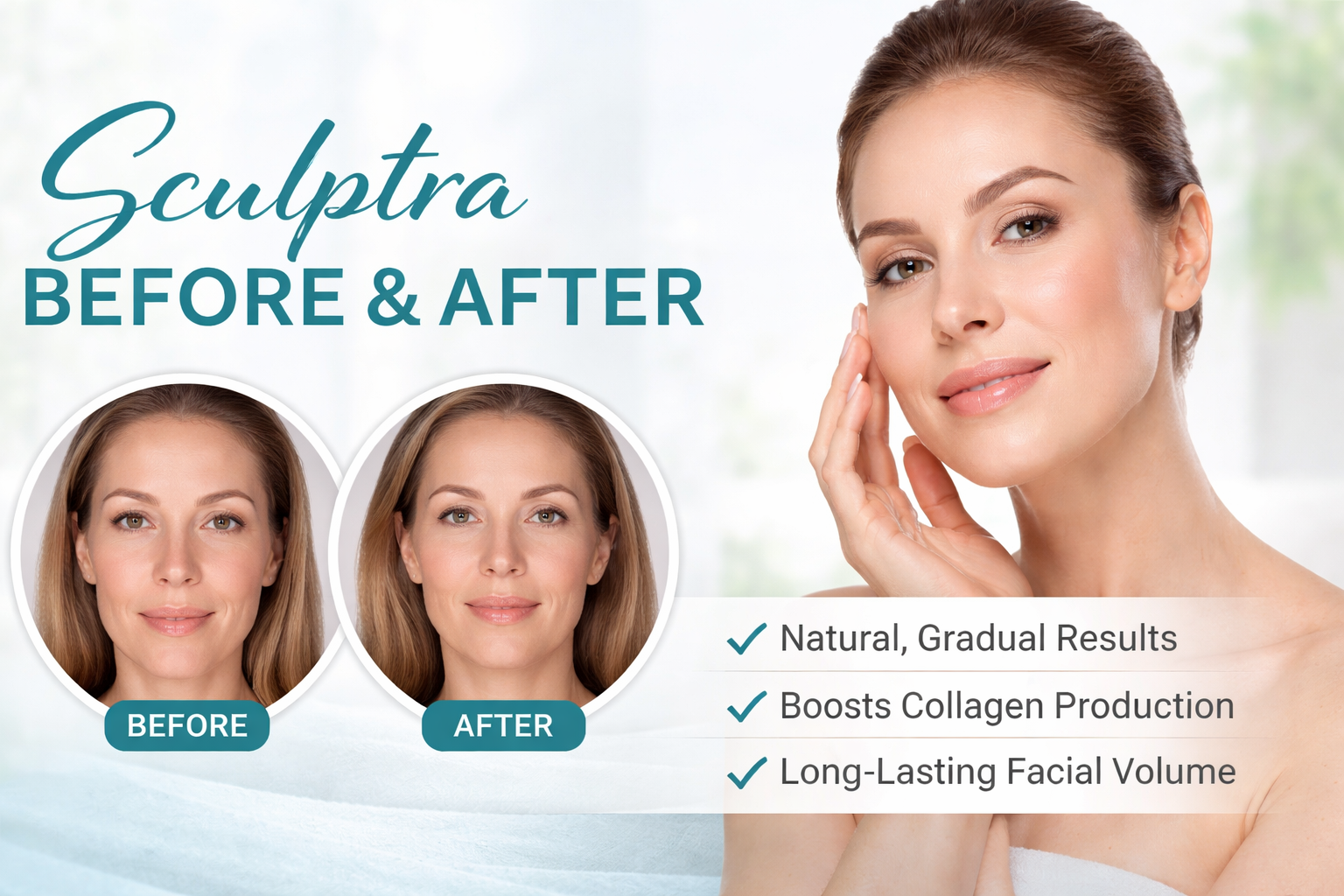

If you’ve been researching non-surgical cosmetic treatments, you’ve probably come across Sculptra before and after photos that look subtle yet impressive. Unlike traditional dermal fillers that deliver instant volume, Sculptra works differently—gradually restoring facial fullness by stimulating your body’s own collagen production.
In this guide, we’ll break down everything you need to know about Sculptra before and after results. From its background and how it works to realistic expectations, timelines, benefits, comparisons, and FAQs, this article is designed to help beginners and curious readers understand whether Sculptra is right for them.
By the end, you’ll have a clear, honest picture of what Sculptra can (and can’t) do—and why it’s become one of the most popular collagen-stimulating injectables in modern aesthetics. Let’s get started,
What Is Sculptra? A Friendly Overview
Sculptra is an FDA-approved injectable treatment made from poly-L-lactic acid (PLLA), a biocompatible and biodegradable substance that has been used in medical applications for decades.
Unlike hyaluronic acid fillers that “fill” wrinkles immediately, Sculptra works by:
- Stimulating natural collagen production
- Gradually restoring volume and structure
- Improving skin thickness and firmness over time
This makes Sculptra a favorite for people looking for natural-looking, long-term facial rejuvenation rather than instant but temporary changes.
The History and Background of Sculptra
Where Did Sculptra Come From?
Sculptra has a longer medical history than many people realize. It was originally developed in Europe in the late 1990s and was first used to treat facial lipoatrophy (fat loss) in HIV patients.
Major Milestones
- 1999 – Introduced in Europe for medical use
- 2004 – Approved by the FDA for HIV-related facial fat loss
- 2009 – FDA approval expanded for cosmetic use in treating facial wrinkles and folds
- 2010s–Present – Widely adopted in aesthetic medicine worldwide
Today, Sculptra is commonly used for cosmetic rejuvenation in both men and women seeking subtle, progressive results.
How Sculptra Works: The Science Behind the Results
Understanding sculptra before and after changes requires knowing how the treatment works inside the skin.
Step-by-Step Breakdown
- Injection – Sculptra is injected into deep layers of the skin
- Initial Volume – You may see temporary fullness from the injection fluid
- Absorption Phase – The fluid is absorbed within days
- Collagen Stimulation – PLLA particles trigger collagen production
- Gradual Improvement – Volume and firmness improve over weeks and months
This collagen-building process is what sets Sculptra apart from traditional fillers.
Sculptra Before and After: What Changes Can You Expect?
Immediate Results (First Few Days)
Right after treatment, patients often notice:
- Mild swelling
- Temporary fullness
- Redness or tenderness at injection sites
These effects are normal and usually subside within a few days.
Short-Term Results (Weeks 2–6)
As swelling fades, some people worry their results are “gone.” This is expected. During this phase:
- Collagen production is just beginning
- Visible changes are minimal
- Skin may feel slightly firmer
Long-Term Results (3–6 Months)
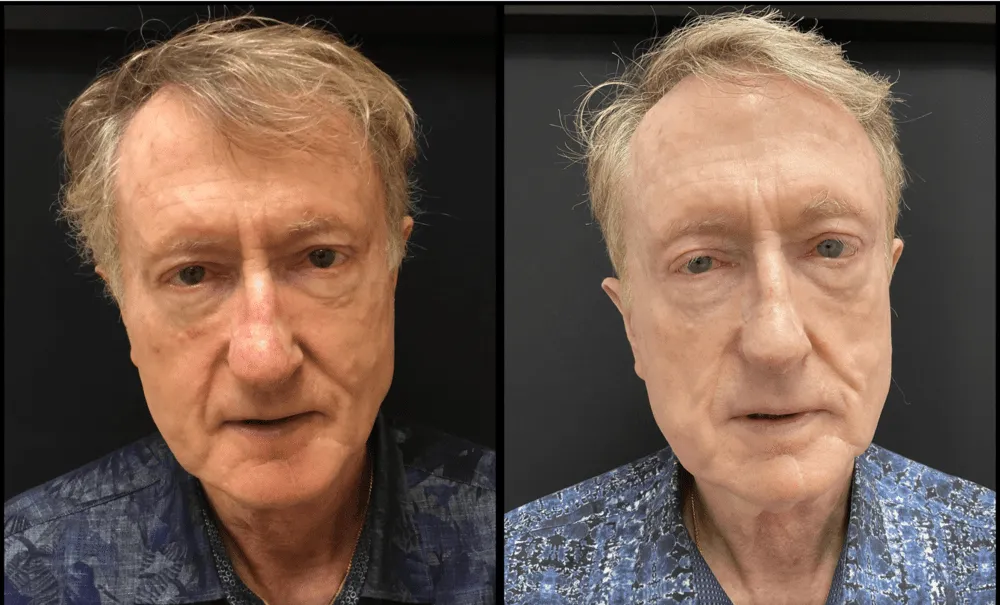
This is when true Sculptra before and after results become noticeable:
- Gradual facial volume restoration
- Softer lines and wrinkles
- Improved skin texture and elasticity
- Natural, refreshed appearance
The results don’t look “done”—they look like a healthier, more youthful version of you.
Areas Commonly Treated With Sculptra
Sculptra is versatile and can be used in multiple areas where collagen loss occurs.
Face
- Cheeks
- Temples
- Jawline
- Smile lines (nasolabial folds)
- Marionette lines
Body (Off-Label but Popular)
- Buttocks (non-surgical butt lift)
- Hip dips
- Thighs
- Décolletage
Because it improves skin quality, Sculptra is often chosen for areas where firmness and structure matter more than instant volume.
Sculptra Before and After vs Traditional Fillers
One of the most common questions is how Sculptra compares to hyaluronic acid fillers like Juvederm or Restylane.
Key Differences at a Glance
Sculptra:
- Gradual results
- Stimulates collagen
- Lasts up to 2 years
- Best for overall volume loss
Traditional Fillers:
- Immediate results
- Adds volume directly
- Lasts 6–18 months
- Best for targeted contouring
Many patients actually combine both treatments for a balanced, long-term approach.
How Many Sculptra Treatments Are Needed?
Sculptra is not a one-and-done treatment.
Typical Treatment Plan
- 2 to 4 sessions
- Spaced 4–6 weeks apart
- Customized based on age, skin condition, and goals
Your provider may follow the “rule of thumb”: one vial per decade of life, though this varies from person to person.
How Long Do Sculptra Results Last?
One of the biggest advantages seen in sculptra before and after photos is longevity.
Duration of Results
- Results can last up to 24 months
- Some patients see benefits even longer
- Maintenance sessions may be done yearly
Because Sculptra builds your own collagen, results fade slowly and naturally.
Recovery and Downtime: What to Know
Sculptra is considered a low-downtime treatment.
Common Side Effects
- Swelling
- Bruising
- Tenderness
- Small bumps (temporary and usually massage-related)
The 5-5-5 Rule
Patients are often advised to massage treated areas:
- 5 minutes
- 5 times a day
- For 5 days
This helps distribute the product evenly and reduces the risk of nodules.
Safety, Risks, and Who Should Avoid Sculptra
Sculptra has a strong safety profile when administered by a trained professional.
Who Is a Good Candidate?
- People with age-related volume loss
- Those seeking gradual, natural results
- Patients with realistic expectations
Who Should Avoid It?
- Pregnant or breastfeeding individuals
- Those with active skin infections
- People with autoimmune conditions (consult a doctor first)
Always choose an experienced injector to minimize risks.
Lesser-Known Facts About Sculptra
Here are a few interesting insights that many people don’t realize:
- Sculptra doesn’t “freeze” your face
- Results look better over time, not immediately
- It improves skin quality, not just volume
- Men increasingly choose Sculptra for subtle rejuvenation
- It’s often used preventatively in younger patients
These factors explain why Sculptra has gained long-term popularity.
Related Treatments Worth Knowing About
To better our understanding, here are treatments often mentioned alongside Sculptra:
- Radiesse
- Hyaluronic acid fillers
- Botox
- Microneedling with PRP
- Laser skin resurfacing
Many aesthetic plans combine these treatments for optimal results.
Also Read: Lip Flip Before and After: What to Expect, Results, Benefits, and Realistic Outcomes
FAQs
How soon will I see Sculptra results?
Most people begin seeing visible improvement within 6–8 weeks, with full results appearing around 3–6 months.
Does Sculptra look natural?
Yes. Because it stimulates your own collagen, results appear gradual and natural rather than artificial.
Is Sculptra painful?
Discomfort is usually minimal. Providers often use numbing agents and mix Sculptra with lidocaine.
Can Sculptra be reversed?
No, Sculptra cannot be dissolved like hyaluronic acid fillers. This is why experienced injectors are essential.
How much does Sculptra cost?
Costs vary by location and provider, but Sculptra is typically priced per vial and may require multiple vials.
Are Sculptra results permanent?
No, but results are long-lasting—often up to two years—with gradual fading.
Conclusion: Is Sculptra Worth It?
When looking at sculptra before and after transformations, the biggest takeaway is subtlety. This treatment isn’t about instant gratification—it’s about long-term skin health, collagen restoration, and natural-looking rejuvenation.
If you’re willing to be patient and want results that evolve gracefully over time, Sculptra can be an excellent option. With the right provider and realistic expectations, it offers one of the most durable and natural outcomes in modern aesthetic medicine.
As always, consult a qualified professional to determine whether Sculptra aligns with your goals and skin needs.